

Electricity prices keep climbing, the energy price cap keeps shifting, and more UK homeowners than ever are looking for a way to take back control of their bills. Solar panels are the obvious starting point. They capture free sunlight and turn it into electricity for your home, giving you access to a genuinely unlimited energy source. But if you want to squeeze every last drop of value out of your panels, the next question is usually about solar battery storage, and more specifically, what it costs.
This guide breaks down the real numbers: average prices, what pushes them up or down, the main brands on the UK market, and whether a battery is actually worth adding to your setup.
What Is a Solar Battery?
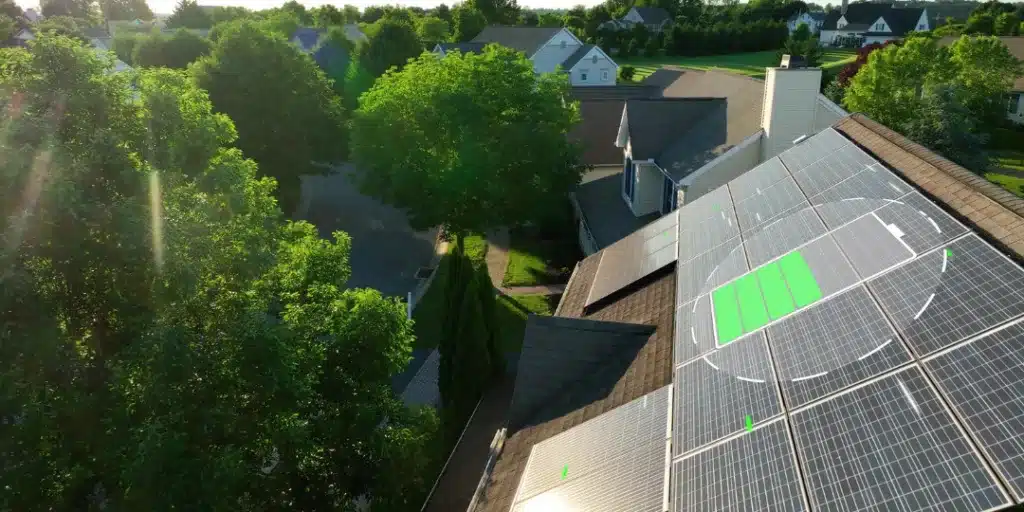
A solar battery is designed to store the solar energy you generate but don’t use straight away, so you can call on it later. On a bright day, your panels might generate far more electricity than your home needs in that moment, especially if you’re out at work or simply not running anything power-hungry. Rather than letting that excess energy flow back to the grid for a small payment, a battery bank stores it for you. You can then draw on it in the evening, overnight, or on a grey day when your panels aren’t producing much.
Solar battery storage essentially extends the working hours of your solar panels, letting you use sunshine that fell hours, or even days, earlier.
DC vs AC Battery Systems: Why It Matters
One detail that catches many homeowners out is the difference between DC and AC battery systems. Your solar panels generate direct current (DC) electricity, but the appliances in your home run on alternating current (AC). An inverter sits between the two, converting the power so it’s usable.
If you’re installing solar battery storage at the same time as new panels, a DC-coupled battery usually makes the most sense. It connects directly to your panels before the inverter, which tends to mean fewer conversion losses and a tidier installation.
If you already have solar panels and you’re adding a battery afterwards, you’ll typically need an AC-coupled system instead, since it connects on the household side of your existing inverter. Some inverters aren’t compatible with every battery type, so this is one of the first things a qualified installer should check before recommending a system.

Solar Battery Storage Cost: The Headline Numbers
So, how much does solar battery storage actually cost in the UK? Prices vary hugely depending on size, brand, and installation complexity, but as a rough guide, the cheapest standalone batteries start at around £1,500, while a premium, fully installed system can run to £10,000 or more. Most homeowners land somewhere in the middle, paying around £4,000 to £8,000 for a standard battery system fitted by a professional installer.
Batteries also don’t last quite as long as the panels they’re paired with. A well-maintained solar panel system can keep working for 25 to 30 years, while most home batteries are rated for somewhere between 10 and 15 years before their capacity starts dropping off noticeably. That’s worth factoring into your long-term budgeting, since you may need to replace your battery at least once during the lifetime of your panels.
Tesla Powerwall 3
Tesla’s latest home battery offers 13.5kWh of usable storage with a built-in inverter, so you don’t need to buy a separate one. It typically costs somewhere between £7,000 and £11,000 fully installed, putting it firmly at the premium end of the market, but its strong power output and slick app make it a popular choice for households that want whole-home backup during power cuts.
Sigenergy SigenStor
The SigenStor is an all-in-one unit that combines a hybrid inverter, modular battery packs, and an optional EV charger in one box. It’s genuinely modular, starting from around 5kWh and stacking up to 54kWh per unit, which makes it a flexible option whether you’ve got a modest semi or a large family home with an electric car on the drive.
AlphaESS
AlphaESS batteries, particularly the Smile G3 range, have built a reputation in the UK as a strong value-for-money option. A 10kWh system typically costs around £5,500 to £6,000 installed, roughly 30% less than a comparable Tesla setup, while still offering a 10-year warranty and genuinely modular expansion.
EcoFlow
Best known for portable power stations, EcoFlow now offers the PowerOcean home battery range, starting from a 5kWh pack and expandable up to 45kWh or more. It stands out for its unusually long 15-year warranty, which is five years longer than most rivals.
GoodWe
GoodWe’s Lynx Home range covers both low-voltage and high-voltage batteries, with capacities scaling from around 5kWh up to over 30kWh. It’s widely regarded as one of the more affordable options on the market, often working out at a competitive price per kWh of storage.
SolarWatt
SolarWatt’s MyReserve system takes a different approach, using small 2.4kWh modules that can be combined to suit almost any household size. It’s a DC-coupled system designed to sit between your panels and inverter, and it’s particularly well-suited to retrofitting onto an existing solar PV setup.
Eleven Energy
Eleven Energy is one to watch if you like the idea of something a bit different. Its Volta batteries use sodium-ion rather than lithium chemistry, which means no reliance on scarce lithium, cobalt, or nickel, plus genuinely impressive cold-weather performance down to around minus 20°C. It’s newer to the UK market, so availability is still building, but it’s a strong option for anyone prioritising sustainability.
What Affects Solar Battery Storage Prices?
A handful of factors explain why one quote for solar battery storage might be half the price of another:
- Battery size: Larger capacity batteries cost more upfront, though the price per kWh often improves as you go bigger.
- Brand: Premium, all-in-one systems like Tesla and Sigenergy tend to sit above modular, budget-friendly options.
- Inverter set-up: If you already have solar panels, your existing inverter may not be compatible with every battery on the market. In some cases, you’ll need to upgrade or replace it before a new battery can be fitted, which adds to the total cost.
- Installation complexity: A straightforward garage installation is cheaper than one that needs extra wiring, a relocated consumer unit, or outdoor weatherproofing.
- Retrofit or new installation: Fitting a battery alongside new solar panels is usually cheaper overall than retrofitting one later, since you avoid paying for a second site visit and a second set of electrical works.
Is Solar Battery Storage Worth It?
This is the question most homeowners actually want answered, and the honest response is: it depends on your household.
According to The Eco Experts, a typical three-bedroom home with both solar panels and a battery could save around £582 a year on electricity. The important detail is where that saving comes from. The vast majority is down to the solar panels themselves; only around £130 a year of that figure comes specifically from using stored battery energy rather than the panels’ direct output.
That doesn’t mean a battery isn’t worth having. It means solar panels alone already deliver the bulk of your savings, and a battery is the icing on the cake rather than the cake itself. If your budget only stretches to one or the other right now, solar panels should be the priority. You can always add solar battery storage later, either at the same time as an inverter upgrade or as a standalone retrofit, once your finances allow.
For households that are home for much of the day, use a lot of evening electricity, or want backup power during outages, a battery tends to make more financial and practical sense than it does for someone who’s out at work all day and uses relatively little power overall.
Smart Export Guarantee (SEG) Payments
If you generate more solar electricity than you use or store, you can sell that surplus back to the National Grid through the Smart Export Guarantee, or SEG. Suppliers pay you per kWh exported, with rates varying from one provider to another.
Here’s the catch: most people don’t realise until they run the numbers that it’s usually more financially sensible to store your own excess energy in a battery and use it yourself later, rather than exporting it for SEG payments. Export rates often sit well below the price you’d otherwise pay to buy electricity from the grid, so the energy you generate is typically worth more to you at home than it is sold on. SEG is best thought of as a bonus for the genuinely excess energy your battery is already full of, rather than your main source of savings.
Some suppliers do offer higher SEG rates at certain times of day, or for customers who had their solar panels installed by that same supplier, so it’s worth shopping around before assuming export is always the lower-value option.
Payback Period: How Long Until a Battery Pays for Itself?
The payback period is simply how long it takes for the money you save on your electricity bills to cover the original cost of your solar battery storage system. It’s one of the most useful numbers for deciding whether a battery makes financial sense for your home, rather than going on price alone.
As a rough guide, a smaller 5kWh battery might save a household in the region of £600 a year, with a payback period of around eight years. A mid-sized 10kWh system tends to save closer to £800 a year, paying for itself in around seven years, while a larger 15kWh-plus system can bring payback down to around six years thanks to greater capacity and self-consumption. Industry analysis from energy tech firm Loop found that, for a combined solar and battery installation, the average payback period currently sits at around seven years when you factor in 0% VAT and today’s energy prices.
Your own payback period will depend on your electricity usage, the tariff you’re on, and how much of your stored energy you actually use rather than export. Pairing your battery with a time-of-use tariff, where you charge it from cheap overnight electricity and use it during expensive peak hours, can meaningfully shorten the time it takes to break even.
What Size Solar Battery Storage Will I Need?
Sizing a battery correctly starts with understanding two figures: how much electricity your solar panels can generate, and how much electricity your household actually uses.
As a general rule, a solar panel system generates roughly double its rated “size” in a typical day. So a standard 4-kilowatt peak (kWp) system could generate around 8kWh of electricity on a good day, weather depending. In that case, you’d ideally want a battery with a maximum capacity of around 8kWh to capture all the surplus energy your system is capable of producing.
It’s also worth checking how much of that stored capacity you can realistically use, since most modern batteries are designed to be discharged to somewhere between 85% and 95% of their total capacity, in order to protect the cells and extend the battery’s lifespan. An 8kWh battery, for example, might only offer a genuinely usable capacity closer to 7kWh once you account for this.
The right size for your home ultimately comes down to your daily electricity use, your solar generation, and whether you’re often out of the house during peak generation hours. A qualified installer can help you size this accurately rather than guessing.
Key Takeaways on Solar Battery Storage Cost
- Solar battery storage typically costs around £4,000 to £8,000 fully installed, though prices range from £1,500 to £10,000-plus depending on size and brand.
- A battery can be installed alongside new solar panels, retrofitted to an existing system, or even installed without solar panels at all.
- Smaller batteries cost less overall, but larger batteries often offer better value per kWh of storage.
- Premium all-in-one batteries cost more upfront but tend to deliver a cleaner, simpler installation.
- Qualifying battery installations currently benefit from 0% VAT until 31 March 2027, after which the rate is set to revert to the reduced 5% rate.
- A battery boosts how much of your own solar energy you actually use, but it doesn’t automatically guarantee a fast payback on its own.
- The right battery for you depends on your electricity usage, your solar generation, your tariff, your budget, and whether backup power matters to you.
The Final Verdict
Solar battery storage is a genuinely good addition for the right household, and if your budget allows, it’s worth doing. It increases how much of your own free solar energy you actually use, helps shield you from rising peak electricity prices, and can provide backup power when the grid goes down.
That said, solar panels remain the foundation and the bigger financial win. The reality is that a large proportion of UK homes still don’t have solar panels installed at all, let alone storage, which means significant savings are being left on the table before storage even enters the conversation. If you’re still at the stage of deciding whether solar is right for you, that’s the place to start. Check through our funding checker to see if you’re eligible for free solar panels or funding support, and you can always look at adding solar battery storage further down the line once your panels are up and running.
Quick Summary: Pros and Cons
Pros
- Lets you use your own solar energy in the evening, overnight, or on cloudy days
- Reduces reliance on the grid during peak, expensive hours
- Can provide backup power during outages
- Currently benefits from 0% VAT until March 2027
- Pairs well with smart, time-of-use electricity tariffs
Cons
- High upfront cost, even with VAT relief
- Shorter lifespan than solar panels, so you may need to replace them before your panels need attention
- Most of your bill savings still come from the solar panels themselves, not the battery
- Payback period can be lengthy, depending on your usage and tariff
- May require an inverter upgrade if retrofitted to an older solar system