


You’ve probably started hearing a lot about balcony solar panels lately. They’ve been popping up in the news, showing up in conversations about energy bills, and getting people genuinely excited about the idea of generating their own electricity from a flat or a small outdoor space.
The concept sounds brilliant: small, simple, plug-in solar that anyone can use. No roof required. No electrician needed.
But is it really that straightforward? Before you click “add to cart,” there are a few important things worth understanding, including whether a balcony solar setup is actually the right option for your home, or whether you’d be far better off with a traditional rooftop solar system that puts significantly more money back in your pocket.
Let’s break it all down.
What Are Balcony Solar Panels?
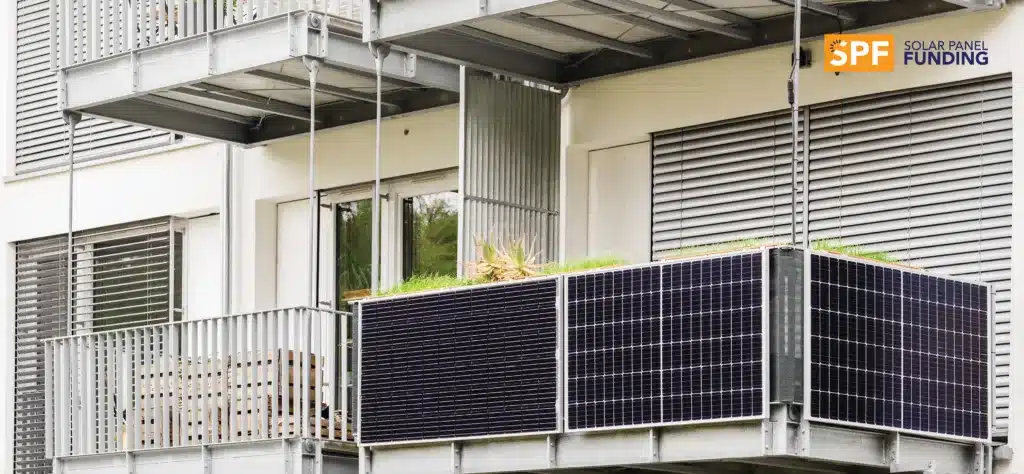
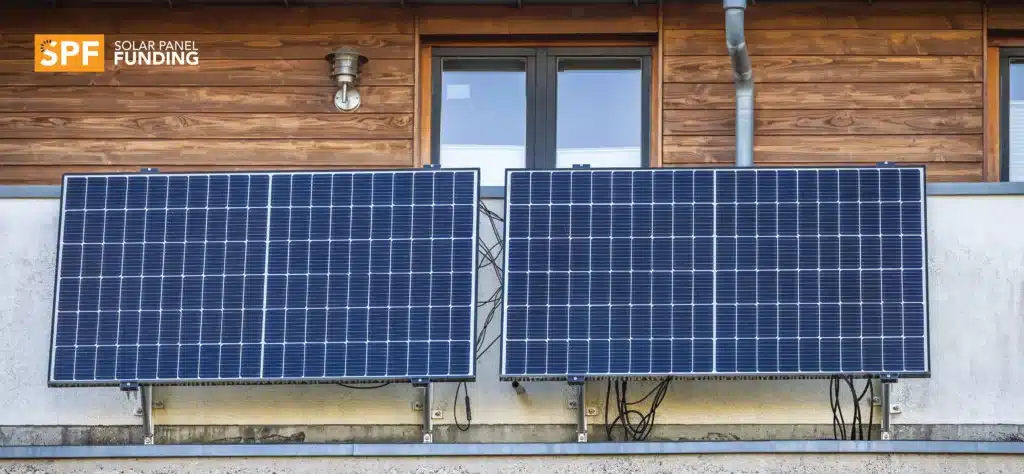
Balcony solar panels, also known as plug-in solar panels or “plug and play” solar, are small solar kits designed to be incredibly easy to set up. Rather than being wired into your home’s electrical system by a professional installer, they simply plug into a standard three-pin socket in your wall, just like any other household appliance.
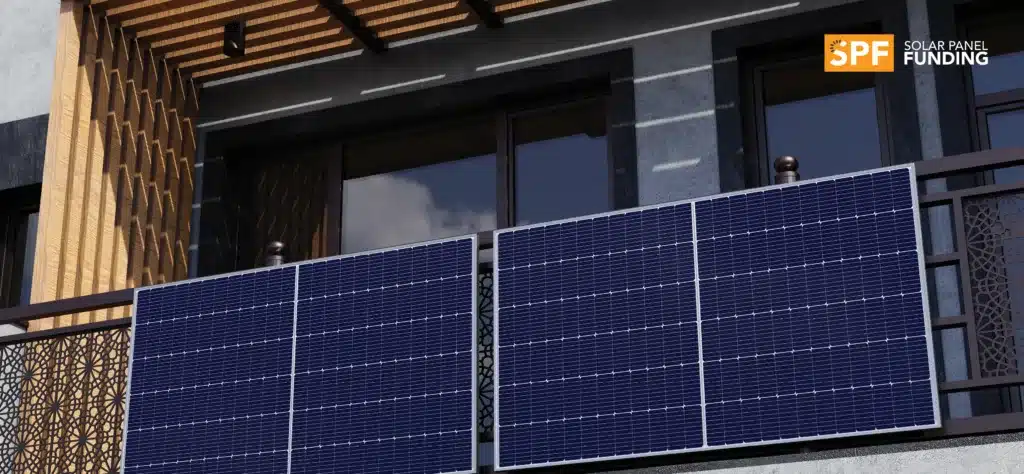
A typical setup consists of one or two solar panels (usually lightweight and portable), a small inverter (the device that converts the energy generated by the panels from DC into AC power that your home can actually use), and a cable that connects to your mains socket. Once set up, any electricity your panels generate feeds directly into your home, reducing the amount you need to buy from the grid.
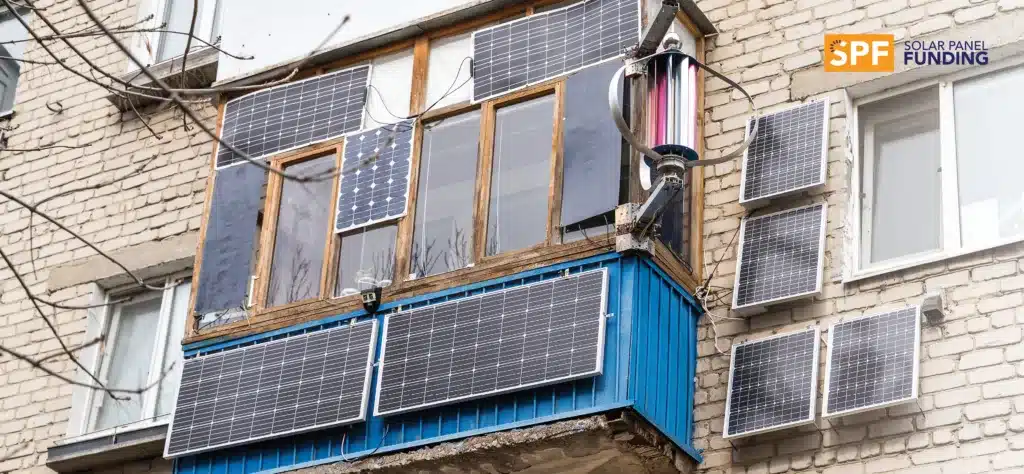
They can be placed on a balcony (hence the name), a terrace, a flat roof, a shed roof, or even propped up in a garden. The idea is that you generate a small but useful amount of free electricity whenever the sun is shining, which chips away at your energy bill without any major upheaval.
Sounds good, right? It can be, but there’s a lot of context you need before making a decision.
Why Are Balcony Solar Panels Suddenly in the News?
If you’ve noticed balcony solar panels getting a lot of attention recently, there’s a very specific reason for that.
On 24 March 2026, Energy Secretary Ed Miliband and Housing Secretary Steve Reed jointly announced that the government would update the regulatory framework to allow sub-800W plug-in solar systems to connect to domestic mains sockets. Previously, this type of DIY solar connection wasn’t legally permitted in the UK, despite being widely available and popular across much of Europe.
The announcement was framed as part of the UK’s response to ongoing volatility in global energy markets and a renewed push for homegrown, clean-power security. With millions of households still struggling with high energy bills, the government sees low-cost plug-in solar as one way to help people take a little more control.
It’s worth noting that the UK was almost the last country in Europe to move on this. According to Carbon Commentary, 25 out of 27 EU member states already allow plug-in solar, and Germany alone had over 1.2 million registered balcony solar units by the end of 2025, with many more believed to be unregistered. So the UK is very much catching up, rather than leading the way.
New regulations are expected to come into force in summer 2026, at which point systems under 800W will be cleared to plug safely into domestic sockets, and major retailers are already gearing up to stock them.
How Efficient Are Balcony Solar Panels?
Balcony solar panels can be a useful option in the right circumstances, but it’s important to set realistic expectations about what they can and can’t do.
A typical balcony solar kit available in the UK ranges from around 300W to 800W. To put that into perspective, the average UK household uses roughly 3,000 kWh of electricity per year. A well-positioned 800W balcony solar kit, depending on your location, orientation, and how much shade it receives, might generate somewhere in the region of 500 to 700 kWh per year. That’s a meaningful chunk, but it’s still only around 15 to 25% of the average home’s total electricity use.
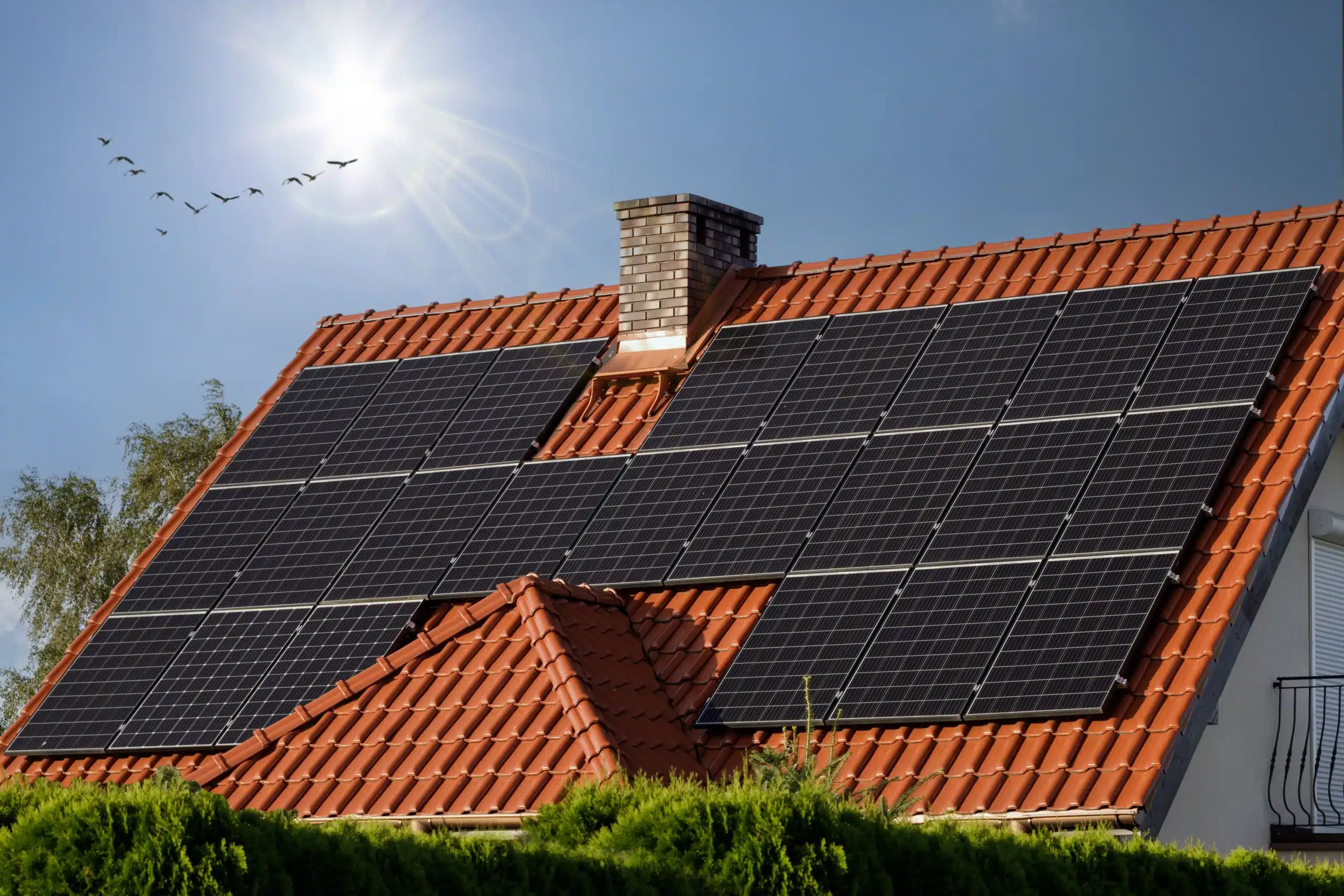
For comparison, a typical rooftop solar system installed on a UK home, usually between 3kW and 4kW in size, can generate around 2,600 to 4,000 kWh per year. That’s three to six times more output from a full rooftop system than a balcony panel kit.
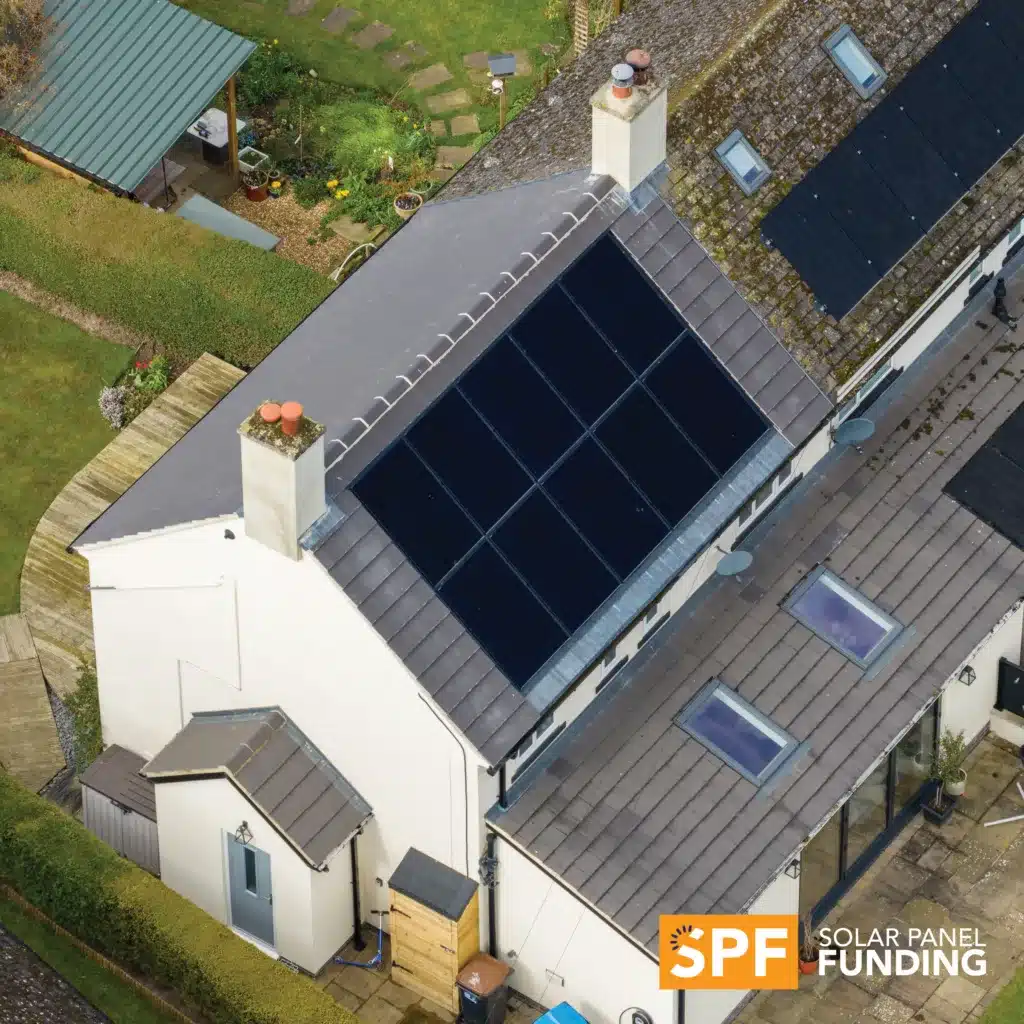
In short, balcony solar panels are efficient for what they are, and they can genuinely take the edge off your electricity bills. But if you have access to a roof, a traditional solar panel system will give you dramatically more free energy, and a far better return on your investment.
How Much Energy Do Balcony Solar Panels Actually Produce?
As mentioned above, a typical balcony solar kit in the UK ranges from 300W to around 800W, the 800W figure being the cap set by the new government regulations. The amount of electricity this produces in practice depends on several factors:
Panel orientation: South-facing panels generate the most electricity in the UK. East or west-facing panels still work, but generate noticeably less.
Tilt angle: Panels mounted vertically (flat against a balcony railing, for example) produce significantly less than panels tilted at around 35 degrees, the optimal angle for the UK.
Shading: Even partial shading from nearby buildings, trees, or railings can reduce output considerably.
Your location: Homes in the south of England will generally get more out of their solar panels than those in Scotland or northern England, simply due to higher average sunlight hours.
Taking all of this into account, according to Carbon Commentary, a 1kW installation in Germany (with a broadly similar climate to the UK in southern regions) might generate around 700 to 1,000 kWh per year, though this is based on a well-positioned system at an optimal angle. A balcony-mounted system mounted vertically could produce considerably less.
Most realistic estimates for UK balcony solar suggest savings of around 10 to 15% on electricity bills, potentially worth £80 to £150 per year, depending on how much electricity you use and when you use it. That’s noteworthy, especially if you’re renting and have no other solar option available.
Why Would You Choose Balcony Solar Over Roof Solar?
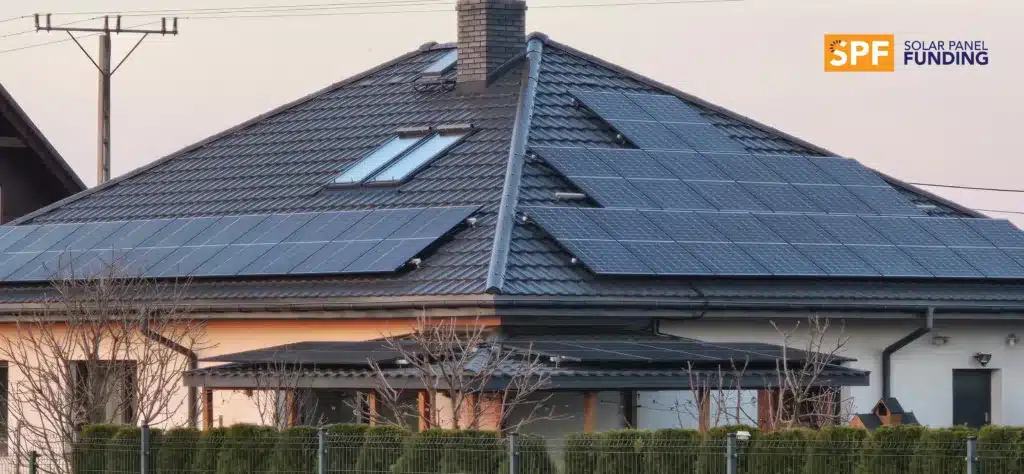
Here’s the honest answer: if you have a suitable roof, you should be putting solar panels on it, not on your balcony. Traditional rooftop solar panels give you more energy, better financial returns, greater safety protections, and the possibility of accessing grants and funding that aren’t available for plug-in systems.
But the key phrase is “if you have a suitable roof.” Not everyone does.
Balcony solar panels make real sense in specific situations:
You rent your home. Most renters don’t have permission to install rooftop solar. A plug-in system requires no structural changes and can be taken with you if you move.
You live in a flat. If you’re in a first or second floor flat with a balcony but no access to the roof, a plug-in system might be your only practical option for generating any solar energy at all.
You have a tiny garden with no usable roof space. Some properties simply don’t have the right orientation or roof space for a traditional installation. For these homes, balcony solar is better than nothing.
You want a low-commitment starting point. For some people, a small plug-in system is a way to dip a toe into solar without a big financial commitment upfront.
If any of these apply to you, balcony solar panels are worth exploring. But if you own your home and have a reasonably sized south, east, or west-facing roof, the maths strongly favour a traditional system. You’ll generate more electricity, potentially qualify for grants or funding, benefit from the Smart Export Guarantee (which pays you for surplus electricity you send back to the grid), and enjoy a much stronger long-term return on investment.
You can find out what funding options might be available to you using the funding checker at Solar Panel Funding, but more on that at the end.
Are Balcony Solar Panels Safe?
This is where things get a little more nuanced, and where it’s worth taking a careful look beyond the positive headlines.
The government’s announcement has been welcomed in principle, but electrical safety experts, fire engineers, and building consultants have raised questions about what happens in practice once these systems are out in the real world.
The Wiring Problem
The UK’s domestic electrical circuits were designed with one assumption baked in: electricity flows in a single direction, from the grid, through your meter, and into your home. Plug-in solar introduces generation into that circuit, meaning current can flow both ways.
The technical director of Electrical Safety First has noted that, without the right updates to wiring regulations, plug-in systems connected to standard household sockets can cause overheating or interfere with the operation of protective devices such as RCDs (Residual Current Devices, the safety switches in your fuse box that cut the power if they detect a fault). The 800W cap is designed to stay within the safe operating limits of standard wiring, but this calculation assumes your wiring is in decent condition. In older UK homes, that’s not always a safe assumption to make.
The good news is that the government has committed to updating both the G98 distribution code and the BS 7671 wiring regulations to account for plug-in solar. These changes are expected alongside the new regulations in summer 2026. Once in place, they should provide proper safety guardrails for UK homes.
The Physical Safety Question
Beyond the electrical side of things, there’s also the question of how the panels themselves are fixed in place. Traditional rooftop solar panels are professionally installed, structurally secured, and subject to strict industry standards. Installers must meet the requirements of the Microgeneration Certification Scheme (MCS), which governs everything from the quality of the equipment to the safety of the installation.
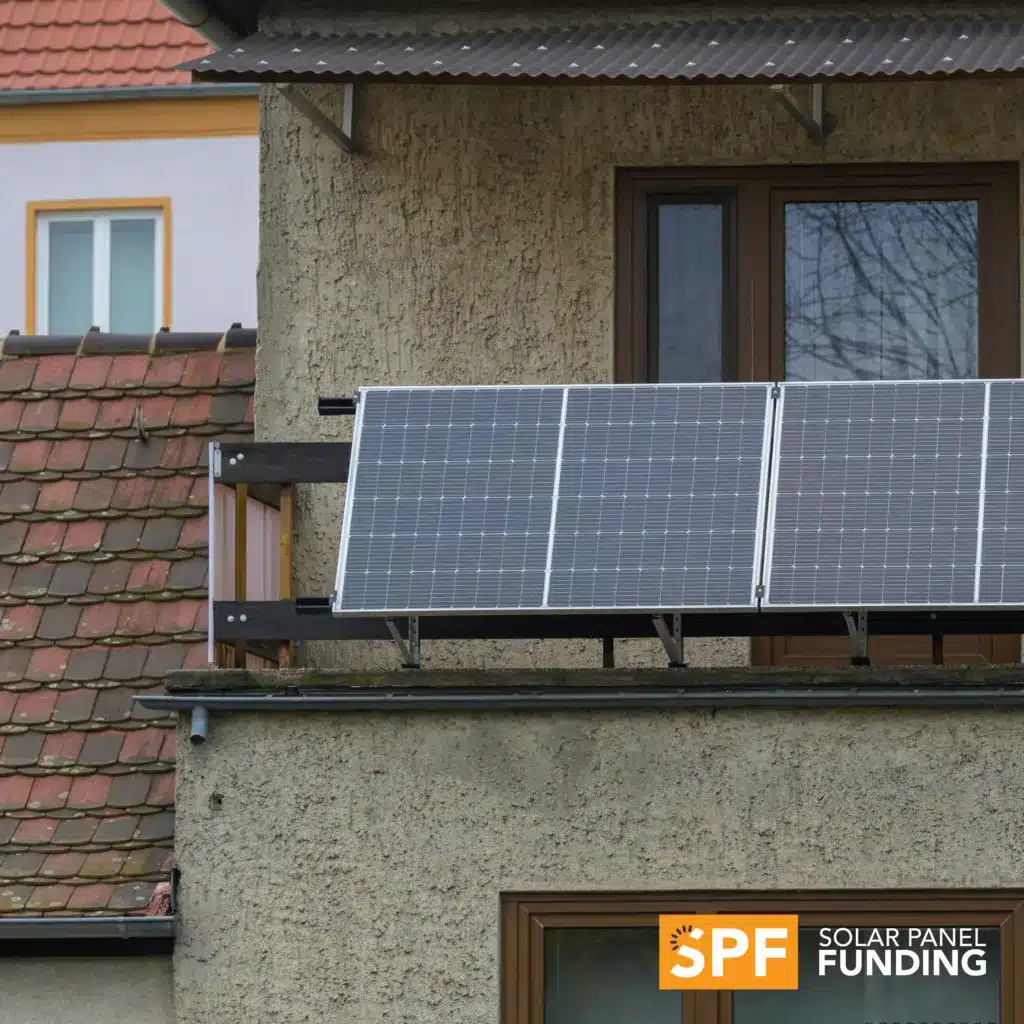
Balcony solar panels are, by design, a DIY installation. That means the quality of how they’re mounted is entirely down to the individual. Panels fixed with zip ties or resting on a balcony railing without proper brackets could, in a strong wind or if knocked, fall from height and cause serious injury. This is not a theoretical concern; it’s one of the reasons that safety bodies have urged people to follow manufacturer guidance carefully and use proper mounting hardware.
For more information on electrical safety and plug-in solar, Electrical Safety First is a useful resource.
What About Funding and Grants for Balcony Solar?
This is one of the most important differences between balcony solar panels and traditional rooftop systems, and it’s a point that often gets overlooked.
Currently, the funding and grant landscape in the UK is built around traditional solar panel systems. The Solar Panel Funding scheme, for example, helps homeowners access grants, discounted installations, and finance options, but these are for MCS-certified rooftop solar installations, not plug-in balcony kits.
The Smart Export Guarantee, the government-backed scheme that pays you for surplus electricity you send back to the national grid, is also primarily designed for rooftop systems connected via an MCS-certified installer. Plug-in balcony solar systems generally won’t be eligible because they’re not professionally connected to the grid in the same way.
What this means in practice is that while a balcony solar kit might cost you £300 to £400 upfront, you’re funding that entirely yourself. There are no grants to apply for, no schemes to access, and no way to earn money from surplus electricity. You’re simply reducing your bills by a modest amount each year.
A fully funded or heavily discounted traditional rooftop solar installation, on the other hand, could cut your bills significantly, potentially saving you thousands of pounds over the lifetime of the system, while also allowing you to earn through the Smart Export Guarantee. The Energy Saving Trust has helpful guidance on the financial benefits of traditional solar installations.
The Honest Bottom Line on Balcony Solar Panels
Balcony solar panels are a genuinely useful technology for people who have no other way of accessing solar energy. If you’re renting, living in a flat, or simply have a home that isn’t suitable for a rooftop installation, a plug-in solar kit is a perfectly reasonable way to shave a little off your electricity bill and take a small step towards energy independence.
They’re also becoming significantly more accessible. With new UK regulations expected from summer 2026, balcony solar will be a legal and straightforward option for the first time, and prices are competitive, with 800W kits available from around £300 to £400. That implies a payback period of roughly three to four years at current electricity prices, which isn’t bad.
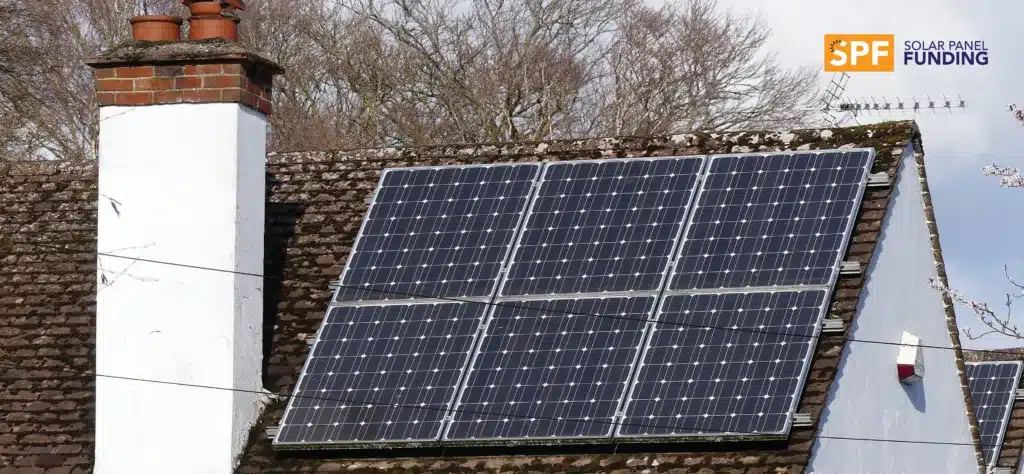
But here’s the important caveat: if you own your home and have suitable roof space, balcony solar panels are not the best use of your money or your property’s solar potential. A traditional rooftop solar system will generate far more electricity, give you access to grants and funding that could cover a significant portion of the cost, allow you to earn money through the Smart Export Guarantee, and deliver a much stronger long-term return on investment. The safety standards are also far more robust, with professional installation and MCS certification providing protections that DIY plug-in systems simply can’t match.
Think of balcony solar as a good solution for people who genuinely have no other option and a missed opportunity for everyone else.
Check What Funding Is Available for Traditional Solar
If you own your home and have roof space, you could be eligible for grants, funding, or discounted solar installation through Solar Panel Funding. The funding checker takes just 60 seconds and could reveal options that make traditional rooftop solar far more affordable than you might think.
Don’t settle for a small balcony kit when you could be generating thousands of kilowatt-hours of free electricity a year from your roof, and potentially qualifying for support to make it happen.
What are balcony solar panels?
Balcony solar panels, also called plug-in or “plug and play” solar, are small solar kits that connect directly to a standard three-pin wall socket. They typically consist of one or two lightweight panels, a small inverter, and a mains cable; no professional installation is required.
Are balcony solar panels legal in the UK?
They’re becoming legal. On 24 March 2026, the government announced plans to allow sub-800W plug-in solar systems to connect to domestic mains sockets. New regulations are expected to come into force in summer 2026, at which point they’ll be a fully legal and straightforward option for UK homeowners.
How much electricity can a balcony solar panel system generate?
A well-positioned 800W kit could generate around 500 to 700 kWh per year, roughly 15 to 25% of the average UK household’s electricity use. Output varies depending on panel orientation, tilt angle, shading, and your location in the UK.
How much money could I save with balcony solar panels?
Most realistic estimates suggest savings of around £80 to £150 per year, depending on how much electricity you use and when you use it. It’s a useful saving, but modest compared to what a traditional rooftop system can deliver.
Are balcony solar panels safe?
They can be, but there are important caveats. Plug-in solar introduces two-way current flow into circuits designed for one-way use, which can cause issues with older wiring or protective devices. The government is updating wiring regulations alongside the new rules in summer 2026. Physical safety also matters; panels must be properly secured to prevent them from falling from height.
Do I need an electrician to install balcony solar panels?
No, that’s part of the appeal. Balcony solar panels are designed for a DIY setup and simply plug into a standard wall socket. However, it’s important to follow manufacturer guidance carefully and use proper mounting hardware, particularly if fixing panels to a balcony railing at height.
Can I get a grant or funding for balcony solar panels?
Not for plug-in kits, no. The grants, funding schemes, and Smart Export Guarantee payments available in the UK are built around MCS-certified rooftop solar installations, so balcony solar kits are self-funded with no grants to offset the cost. However, if you own your home and have suitable roof space, Solar Panel Funding offers private grants and funding options for traditional rooftop solar, meaning you could get a far better system for significantly less than you’d expect. It’s worth checking your eligibility before you commit to a balcony kit.
Get Proper Solar Panels
Stop shopping for a tiny fix if what you need is a real solution.
Apply for Solar Panel Funding today and find out whether you could install a full solar panel system, cut your household energy bills properly, use clean energy and avoid paying the full upfront cost in one hit. Please visit the home page or click the button below to fill out the funding checker and see if you qualify for solar panel funding.