

- What the Government’s Be Ready Campaign Asks For
- Why the Government Is Telling Households to Stock Up Now
- What 72 Hours Without Power Really Looks Like
- What to Have in Your 72-Hour Emergency Kit
- Why Keeping Your Own Power On Is the Best Case Scenario
- Find Out if Your Home Qualifies for Fully Funded Solar Panels
- Government Stock Up FAQs
The government stock-up advice came out on 22 October. It asks households across Britain to keep enough supplies to get through three days without power, water, phones or the internet. Within days, Storms Austen and Boelo had cut power to more than 800,000 properties. For a lot of families, the advice suddenly felt very real.
A torch and a few tins will get you through a power cut. A home that keeps its own lights on is in a far better position. This guide covers what the government is asking you to prepare for, why they’re asking now, what exactly to put in your 72-hour emergency kit, and how solar panels with battery backup can keep your home running while the rest of the street sits in the dark.
What the Government’s Be Ready Campaign Asks For
The Be Ready campaign comes from the Cabinet Office. The advice released on 22 October is the first stage of a three-year push to help households prepare for events such as severe weather, which can disrupt power, water, phones and the internet. The main ask is to be ready for three days, a benchmark France, Ireland and the Netherlands already use. Over 500 organisations, from charities to businesses, have signed up to share the advice.
The government has chosen its words carefully. The official checklist avoids the word stockpile altogether and encourages people to build up supplies gradually as part of their normal shopping. Shoppers moved fast anyway. Iceland said tinned food sales rose by 40% over the weekend after the launch. Robert Dyas reported a 160% jump in radio sales, and Maplin said torch sales almost quadrupled within three days.
Why the Government Is Telling Households to Stock Up Now
The official reasoning points to severe weather, with last winter’s storms and this summer’s wildfires given as examples of how quickly everyday services can be knocked out. Security chiefs have also warned about cyber attacks and hostile states, and all of this lands on a grid that’s busier than ever. Data centres running AI helped push Britain’s electricity demand up in 2025, and their demand is forecast to quadruple by 2030.
Storms Are Already Cutting Power to Hundreds of Thousands of Homes
The past fortnight showed exactly what the government is worried about. When Storms Austen and Boelo hit back-to-back in late October, power cuts reached 838,700 properties across Britain. In Sussex, one power cut even left a local reservoir without electricity.
Long outages have happened before. When Storm Arwen struck in November 2021, close to a million homes and businesses lost power. 40,000 were without it for three days, and almost 4,000 went over a week.
Cyber Attacks and Hostile States
Weather is only part of the picture. On the day the campaign launched, the Defence Secretary said the UK must prepare for state-sponsored attacks on civilian infrastructure. In April, the head of the National Cyber Security Centre said most of the serious cyber incidents hitting Britain now trace back, directly or indirectly, to nation-states including China, Iran and Russia.
The government’s own 2026 National Risk Register describes a national power outage as low likelihood but catastrophic. It warns that one could set off a chain reaction across water, communications and transport. The new edition also builds in lessons from the 2025 blackout that hit Spain and Portugal.
What 72 Hours Without Power Really Looks Like
A short power cut means an evening by torchlight. Three days without electricity in November is a different situation entirely.
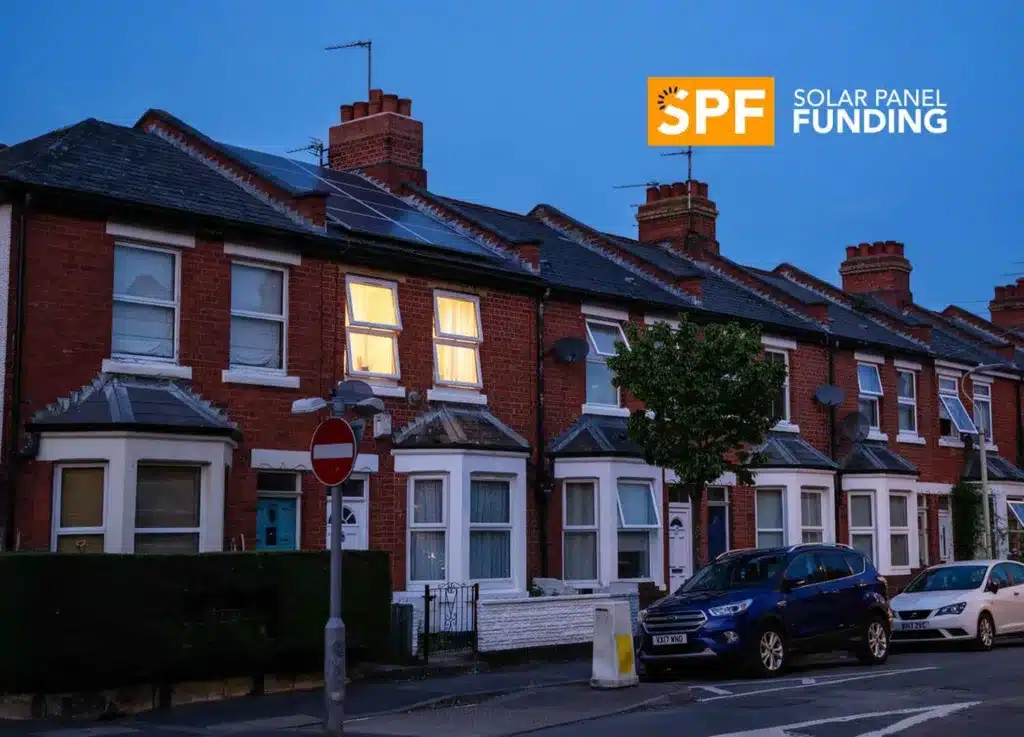
Heating is usually the first big problem. Most gas boilers need electricity to start, so a gas-heated home can lose its heating along with its lights. Heat pumps and electric storage heaters stop working too. Electric ovens and hobs go off; most modern gas ovens won’t run without power, and the spark that lights a gas hob may not work either. The fridge and freezer start to warm up, phones run down, the Wi-Fi router switches off, and card payments become unreliable.
Most homes are nowhere near ready. The Cabinet Office’s 2026 preparedness survey found that 82% of households would have less than a day’s bottled water at the recommended amount. Only 4% had enough for three days. A quarter of people said they could only cover their household’s basic needs for a day or less if a power cut also hit their gas and water. More than a third think a power cut lasting three days or longer is likely in their area within the next two years.
What to Have in Your 72-Hour Emergency Kit
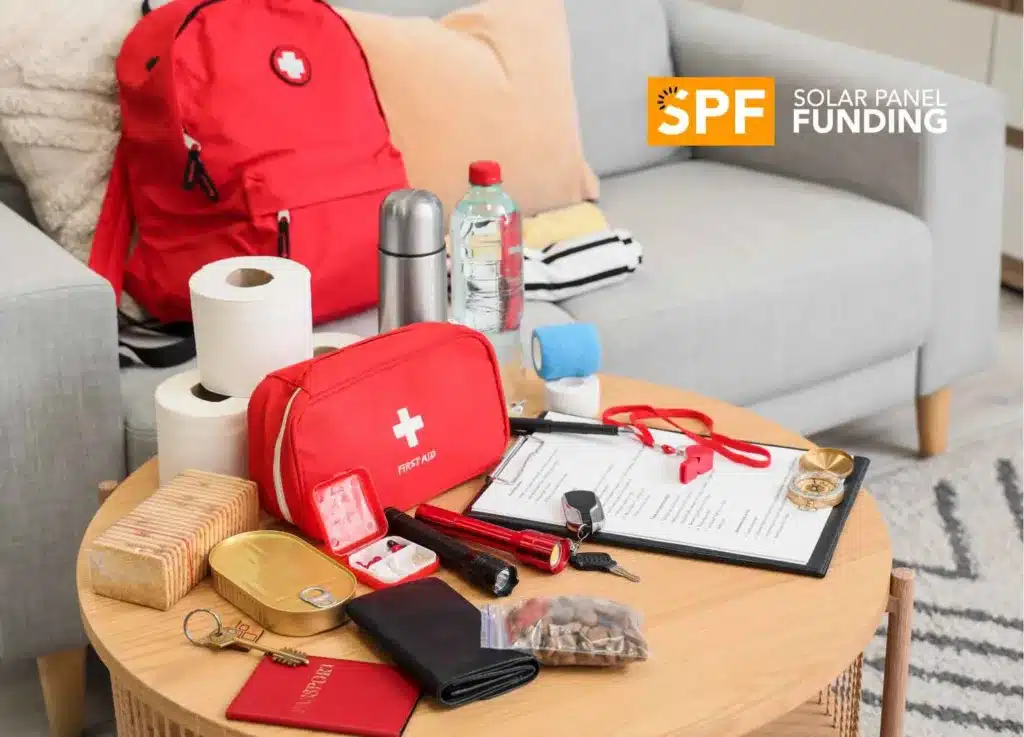
The government’s ‘Be Ready’ checklist sets out what to keep at home to cover three days:
- Water: 3 litres per person per day for drinking, plus extra for cooking and washing. That’s 9 litres each for three days, and 36 litres just to drink for a family of four.
- Food: Three days of long-life food that needs no fridge or cooking, such as tinned meat, fish or vegetables, dried fruit and nuts. Choose food your household already eats.
- Light: A torch and spare batteries, which are safer than candles.
- Warmth: Blankets, sleeping bags and warm clothes.
- Radio: A battery-powered or wind-up FM radio for updates, with your local and national station frequencies written down.
- Power bank: Kept charged for phones and any compatible medical devices.
- Cash and cards: A mix of notes and coins in case card payments or cash machines go down.
- Documents: Copies of ID and key papers such as passports, birth certificates, insurance details and instructions for any medical equipment.
- Contacts and medication list: Written on paper, including anyone you’d need to check on and the names and doses of any regular medication.
- First aid kit: Plasters, bandages, a thermometer, antiseptic, sterile dressings, gloves and tweezers.
- Medication: Request repeat prescriptions up to five working days before you need them so you don’t run short.
- Hygiene: Hand sanitiser, wet wipes and bathroom essentials.
- Baby supplies: Ready-to-feed formula, since you may not be able to boil water safely, plus nappies and wipes.
- Pets: Food and extra bottled water.
A camping stove is useful for hot food and drinks, but only ever use one outdoors. Only 19% of people have one at home.
Two free steps are worth doing today. If anyone at home might need extra help in an emergency, sign up to the Priority Services Register. It helps gas, water and electricity companies identify customers who need support. Add 105 to your phone and your written contacts list as well, since it’s the number to call about a power cut.
You don’t need to buy it all at once. Adding a few items to each weekly shop spreads the cost, and checking your supplies regularly keeps everything in date.
Why Keeping Your Own Power On Is the Best Case Scenario
A well-stocked cupboard helps you get by. Power banks run flat, torches get through batteries, and a camping stove has to stay outside. The best place to be during a long power cut is a home that keeps working: lights on, fridge cold and phones charged while the rest of the street waits for the engineers. Solar panels with battery backup can give you that.
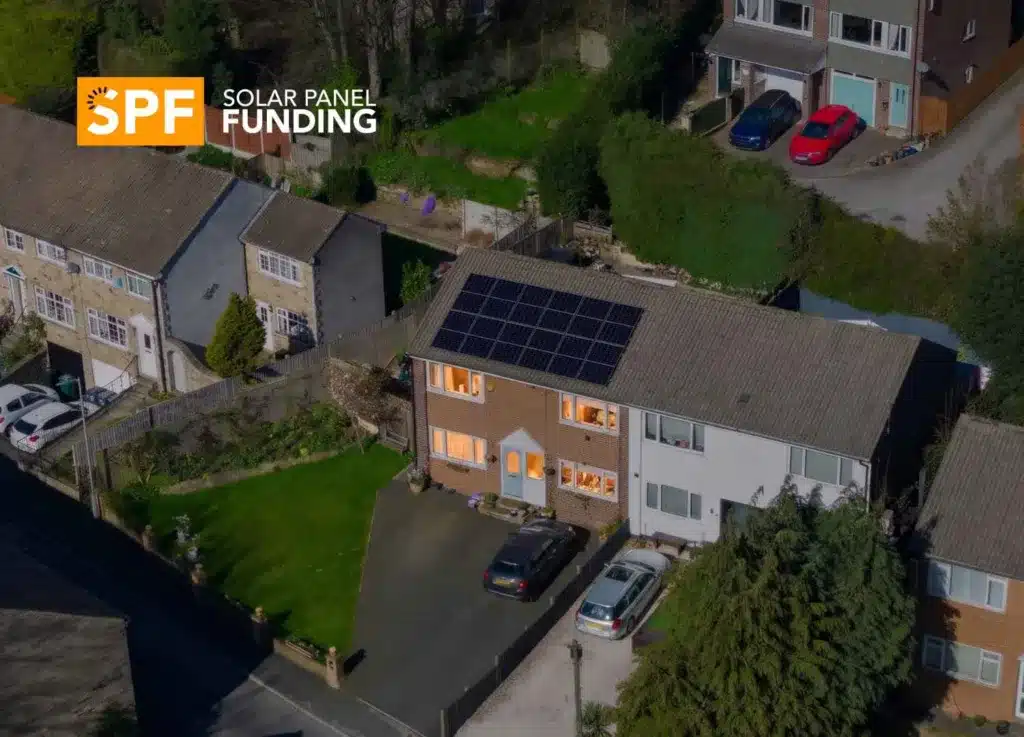
What Solar Panels Do for Your Home Every Day
Solar panels turn daylight into electricity for your home. Every hour of daylight cuts the amount of power you need to buy from the grid. That means lower energy bills, more protection from price rises and a home that relies less on a network under growing pressure.
They keep working through winter too. Panels respond to daylight rather than heat, so they carry on producing power on cold, cloudy and overcast days. Cooler temperatures can even help them run more efficiently.
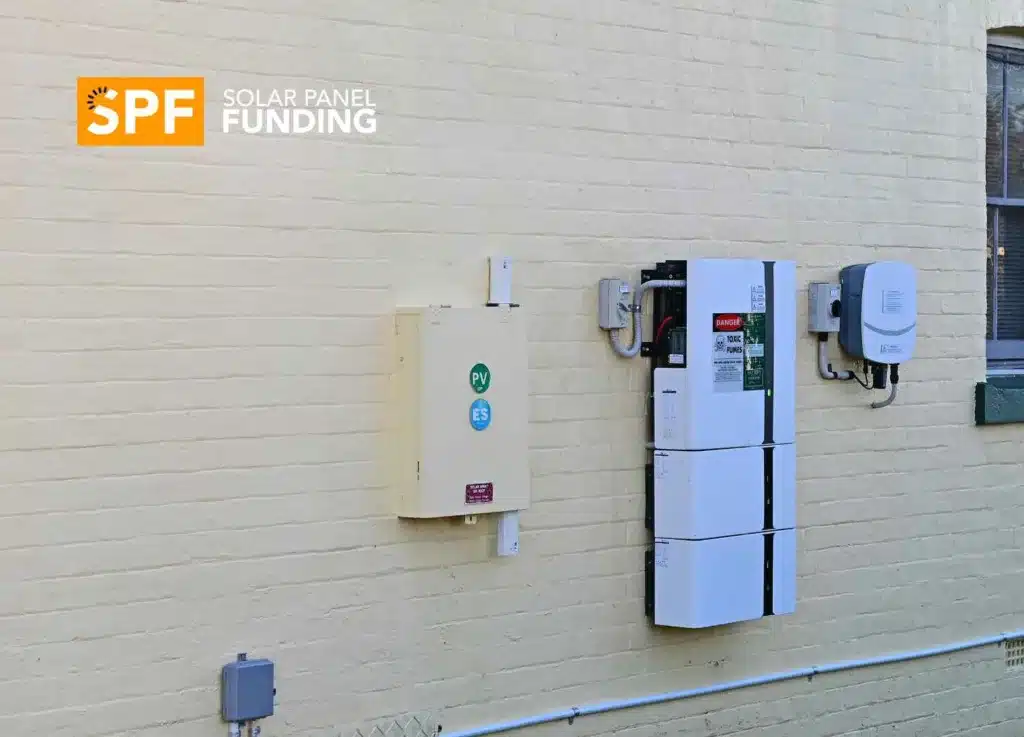
Add a Backup Battery and Keep the Lights On
Pair your panels with a battery, and the electricity they generate during the day can be stored and used whenever you need it. Choose a battery with a backup function, known as an emergency power supply or EPS, and it can keep your lights on when the grid goes down. If it’s set up correctly, the panels keep topping the battery up during daylight, giving your home hours or even days of electricity during a power cut.
That could mean lights on, a cold fridge, charged phones and working Wi-Fi. If the boiler is wired into the backup circuit, it can still fire up too. Solar panels on their own already cut your reliance on the grid every day. Adding a backup battery takes that independence further, so your home can keep going when the network can’t.
Find Out if Your Home Qualifies for Fully Funded Solar Panels
The government wants every home ready for 72 hours. A cupboard of supplies is a great start, and generating your own electricity puts your home on a much stronger footing.
Solar Panel Funding can tell you whether you qualify for fully funded solar panels. Fill in our short form and our team will check your eligibility. If you don’t qualify, we’ll find you the best solar rates from a local installer, and there are other finance and funding options to explore too.
Government Stock Up FAQs
What has the government told households to stock up on?
The ‘Be Ready’ checklist covers three days of bottled water and food that needs no cooking or fridge. It also includes a torch, a battery- or wind-up radio, a charged power bank, cash, copies of important documents, a written list of contacts and medication, a first aid kit, essential medicines and hygiene items, plus baby and pet supplies where needed.
How much water do I need for a 72-hour emergency kit?
Allow 3 litres per person per day for drinking, which comes to 9 litres each over three days, with extra needed for cooking and washing. A household of four needs 36 litres just to drink.
Is the government telling people to panic buy?
No. The advice is to build up supplies gradually during regular shopping trips, and ministers have said they want people to be alert rather than alarmed. Picking up a few extra items each week does the job without emptying the shelves.
Do solar panels work in a power cut?
With the right setup, yes. To protect engineers repairing the network, standard grid-connected systems switch off automatically while the power is down. With a battery that has backup capability, such as an EPS-ready system, your panels can keep generating and powering a backup circuit during an outage. If backup power matters to you, it’s worth looking into a backup-ready battery alongside your panels.
Do solar panels work in winter?
Yes. They generate electricity from daylight, so cold, grey days don’t stop them, and the cold can actually make them more efficient.
What should I do if my power goes off?
Call 105 to report it, and avoid opening the fridge or freezer unless you need to. Use torches rather than candles, and check in with neighbours who might need extra support.