

- What are solar panels, and how do they save you money?
- Is it worth getting solar panels in Wales?
- How much do solar panels cost in Wales?
- How much space is needed for solar panels?
- How to get free solar panels in Wales
- What if I do not qualify?
- Can I get free solar panels in Wales if I rent?
- Making a start on solar in Wales
- Frequently asked questions
Wales is quietly filling up with solar. Recent industry estimates suggest around 9.9% of Welsh households now have panels on the roof, which works out to roughly 138,845 homes. Drive through most Welsh towns, and you will spot them, and the reason is simple: energy bills went up and stayed up, and a lot of people decided they would rather generate their own power than keep paying for someone else’s.
If you have looked at your neighbour’s roof and wondered whether you could do the same without finding thousands of pounds up front, this guide is for you. Below you will find what solar actually costs in Wales, how much roof space you need, what you can realistically expect to save, and how funding for free solar panels in Wales works.
What are solar panels, and how do they save you money?
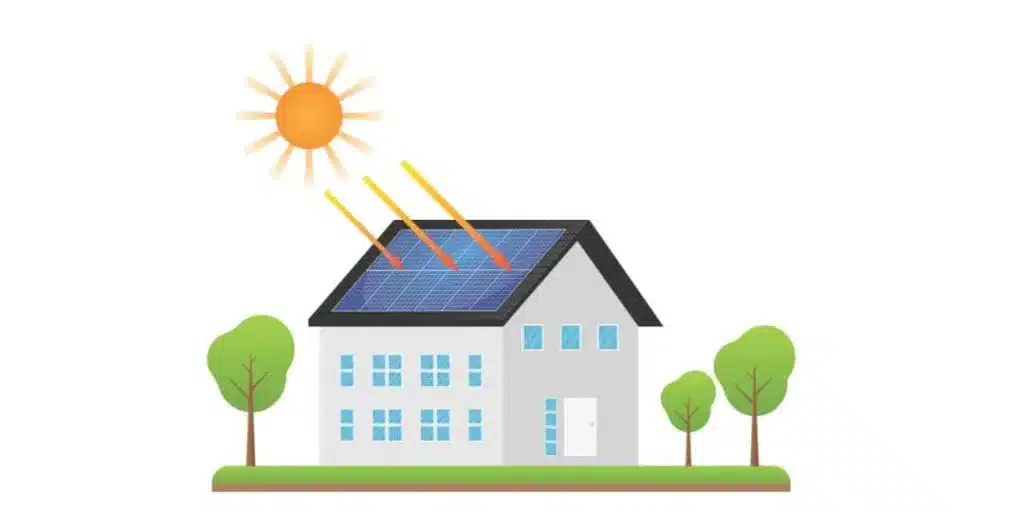
Solar panels, or solar PV panels to give them their full name, are flat panels made up of lots of small cells. When daylight hits those cells, they produce electricity.
How a solar system works on a normal house
The electricity your panels make comes out as DC power, which is not the type your house runs on. So the system includes a box called an inverter, usually fitted in the loft or a utility cupboard, which converts it into the AC power your kettle, fridge and washing machine can use. From there it flows into your fuse board and gets used like any other electricity in the house.
There are no moving parts, nothing to refuel and very little to maintain. Most good quality panels come with performance warranties of 25 years or more, and plenty carry on working past that.
Where the savings actually come from
There are two ways solar puts money back in your pocket.
The first, and by far the bigger one, is simply using your own electricity instead of buying it. Every unit your panels make, and your house uses, is a unit you are not paying your supplier for.
The second is getting paid for what you do not use. Any electricity you generate and do not need gets exported to the grid, and under the Smart Export Guarantee your supplier pays you for it. All large energy suppliers are legally required to offer an export tariff, so this is worth asking about before you sign up with anyone.
The practical takeaway is this: the more of your own power you use during daylight hours, the better solar works for you. Running the dishwasher at 2 pm rather than 10 pm sounds like a small thing, but over a year it adds up.
Is it worth getting solar panels in Wales?
For most Welsh homes, yes. There are two reasons why, and neither of them is the one people expect.
Panels run on daylight, not heat
This is the bit that surprises people. Solar panels do not need a heatwave; they need light. A bright, cool day in Aberystwyth in April is excellent conditions for a solar panel. In fact, panels lose a little efficiency when they get extremely hot, which is why the mild Welsh climate is not the disadvantage it sounds like.
Wales gets a perfectly workable amount of daylight for solar, and while it varies between the sunnier southern coast and more mountainous inland areas, the difference is smaller than most people assume. If you want to see the numbers for your part of the country, the Met Office publishes regional climate data for Wales.
How long before it pays for itself
One recent market analysis put the average break-even point for a Welsh home at 13.88 years, compared with a UK average of 15.66 years. In other words, Welsh homeowners tend to reach the point where their system has paid for itself faster than the UK average.
That figure assumes you paid for the system yourself. If you qualify for funded or free solar panels in Wales, the maths changes completely, because there is no upfront cost to recover in the first place. You are into savings from day one.
How much do solar panels cost in Wales?
Solar panel prices in Wales sit broadly in line with the rest of the UK. Across the market, a full domestic system runs anywhere from about £2,500 to £10,500 fitted, with most typical family homes landing somewhere in the middle of that range depending on size and extras.
The reason the range is so wide is that no two roofs are the same. Here is what moves the number:
- System size. More panels means more cost, but also more generation.
- Panel type. Monocrystalline panels are more efficient and cost more per panel. Polycrystalline panels are cheaper and slightly less efficient.
- Scaffolding. If your roof cannot be reached safely without it, expect to add roughly £500 to £700.
- Battery storage. Optional, and priced anywhere from about £1,500 to £8,000 depending on capacity.
- Roof complexity. Multiple pitches, awkward access, older roof coverings and unusual tile types all take longer to work on.
One piece of good news on price: there is currently no VAT on domestic solar panel installations in the UK. The zero rate is in place until 31 March 2027, at which point it is scheduled to return to 5%. That alone knocks a meaningful chunk off a quote compared with a few years ago.
What size system does a Welsh home need?
Ofgem’s benchmark for a medium household is around 2,700 kWh of electricity a year, although plenty of Welsh homes use more than that, particularly larger properties, rural homes off the gas grid, and anywhere heated by electricity.
A 4kW system in Wales will typically generate somewhere around 3,400 to 3,800 kWh a year, which covers a fair bit of a normal household’s usage. That is why 4kW is the size most often quoted for a three- or four-bedroom house, made up of roughly nine to eleven panels.
Smaller terraced homes and flats with limited roof space often do very well on a 2kW to 3kW system. Bigger detached properties with electric heating or an EV on the drive may want 5kW or more.
How much space is needed for solar panels?
A standard domestic panel measures around 5.5ft long by 3.5ft wide, so allow roughly 18 to 20 sq. ft of roof per panel.
Modern panels are far more powerful than the ones sold a decade ago, typically 400W to 450W each, so you need less roof than older guidance suggests. As a rough rule of thumb with current panels:
- 2kW system: about 5 panels, roughly 100 sq. ft of roof
- 4kW system: about 10 panels, roughly 190 sq. ft of roof
- 5kW system: about 12 to 13 panels, roughly 230 to 250 sq. ft of roof
If you have seen figures suggesting a 5kW system needs 500 sq. ft or more, those come from the days when a single panel produced half what it does now. Worth knowing if you have an older article open in another tab.
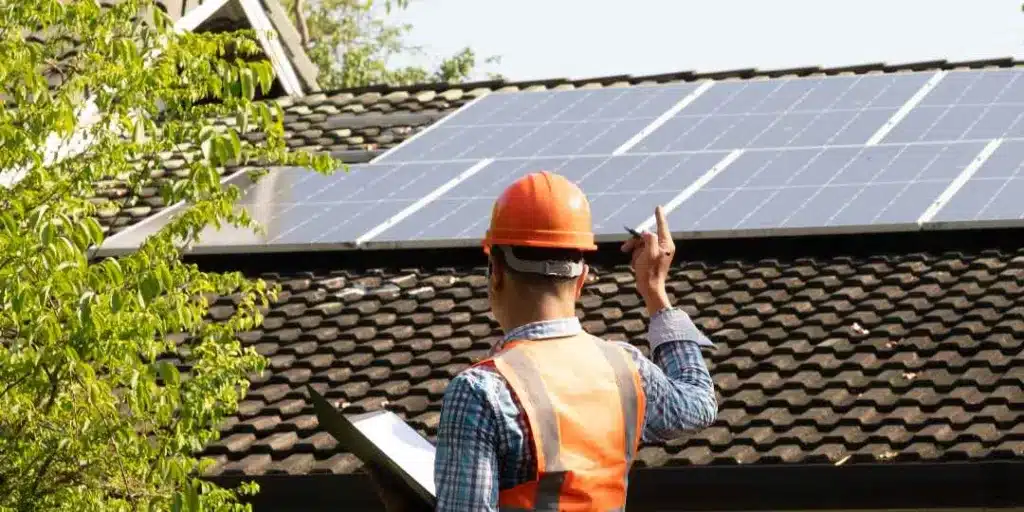
What if my roof does not face south?
South-facing roofs are the ideal, but they are not the only option. East- or west-facing roofs typically generate around 15% to 20% less over a year, which is often perfectly acceptable, and an east-west split can actually suit households that use most of their power in the morning and evening.
North-facing roofs are not suitable. Flat roofs are fine, using mounting frames set at the right angle. If your roof genuinely will not work, ground-mounted panels in a garden or paddock are possible, though they cost more to install because of the extra groundwork and cabling.
Most domestic installations in Wales fall under permitted development, meaning you will not need planning permission. Listed buildings, conservation areas and some flats are the exceptions, so it is always worth a quick check first.
How to get free solar panels in Wales
You may be eligible for free solar panels in Wales. Eligibility depends on your circumstances, your property and a few other details, and it is not something you can accurately work out from one form.
How the funding checker works
Head to the funding checker on the Solar Panel Funding website and answer the questions. It is short. Someone from the team will then give you a quick call back to go through a few more details and talk you through your options properly, including what a system on your particular roof would look like.
No obligation, no pressure, and you will come off the call knowing where you stand, which is more than most people get after an hour of googling.
If you would rather read the criteria before you pick up the phone, the full eligibility breakdown is published on the site.
Getting your paperwork ready
You will get through the call faster if you have a rough idea of the following:
- Your annual electricity usage in kWh, which is on your bill or your online account
- Whether you own the property
- The age and rough condition of your roof
- Whether the property is listed or in a conservation area

What if I do not qualify?
Not everyone will be eligible for free solar panels in Wales, and it would be daft to pretend otherwise. If you do not qualify, you will not be left to start from scratch.
The team will put you in touch with the best installer they know for your area, one who will give you the keenest price they can on a system that suits your home. Given how much quotes can vary between installers for identical work, that alone is worth having.
Whichever route you go down, check that your installer is registered with the Microgeneration Certification Scheme. MCS registration is the industry quality standard, and you generally need an MCS-certified installation to access Smart Export Guarantee payments from your supplier.
Can I get free solar panels in Wales if I rent?
Solar funding normally requires the property owner’s involvement, so if you rent, the conversation needs to include your landlord. It is worth flagging it to them, as solar improves a property’s EPC rating and its appeal to future tenants. Social housing tenants should speak to their housing association or council, as many are running their own solar programmes.
How long does installation take?
Most domestic installations are done in one to two days once scaffolding is up. The paperwork, survey and scheduling around it take longer than the fitting itself.
Making a start on solar in Wales
Solar stacks up in Wales for reasons that have very little to do with sunbathing weather. Panels run on daylight rather than heat; the mild climate actually suits them, and Welsh homeowners tend to reach break-even faster than the UK average. Add a system that costs nothing up front, and the case gets stronger again.
The three things worth taking away:
- Size matters more than luck. Match your system to your actual electricity usage rather than guessing, and check you have the roof space to fit it.
- When you use power changes what you save. Shifting heavy appliances into daylight hours costs nothing and improves your return.
- Eligibility is quick to check and impossible to guess. Two minutes on the funding checker will tell you more than an afternoon of reading.
If you have been putting off finding out whether you qualify for free solar panels in Wales, that is the easy bit sorted. Complete the funding checker, take the call back, and you will know exactly what your options are. The team is happy to answer questions either way, so if you are still weighing it up, get in touch and ask.