

800W Plug-In Solar Kits UK: What They Are, What They Cost, and When They’re Worth It
An 800W cap. A wiring regulation most people have never heard of. A British Standards Institution timeline that keeps shifting. It’s not exactly the stuff of headlines, yet 800w plug in solar kits have somehow become one of the most searched-for energy products in the UK this year, with Amazon listings, government announcements, and forum threads all promising the same thing: cheap, DIY solar power you plug straight into your wall.
The reality is a little more complicated than “buy it, plug it in, save money.” As of 15 April 2026, an update to the UK’s wiring regulations (BS 7671 Amendment 4) finally gave plug-in solar a proper legal framework, capping systems at 800W and setting out exactly what’s needed to connect one safely. That’s progress, but it doesn’t mean every kit on sale right now is ready to be plugged straight into a socket without a second thought.
This guide walks through what these kits actually are, how they work, what they cost, and the honest truth about how much they’ll save you. We’ll also cover something that rarely makes the headlines: if you own your home and have a roof, plug-in solar is rarely the smartest move you could make.
What Are Plug-In Solar Panels?
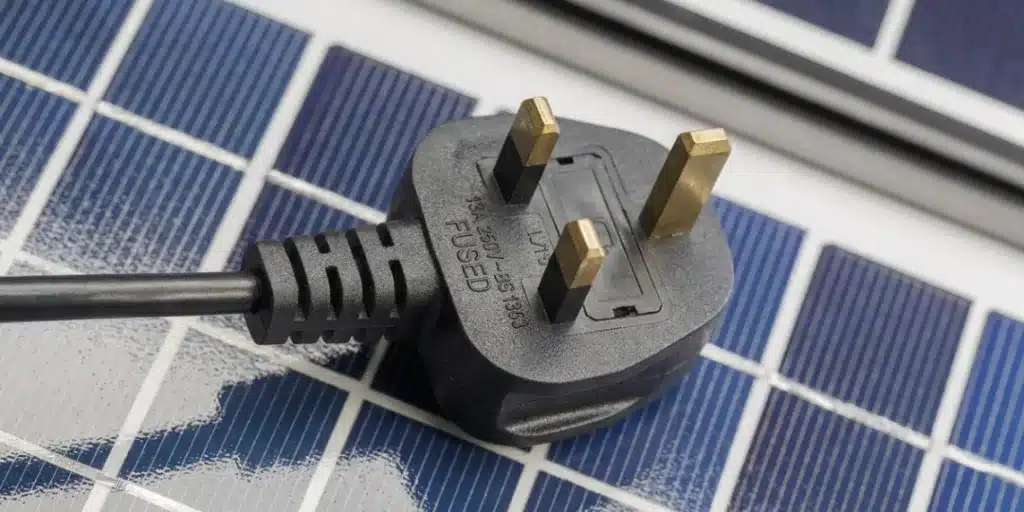
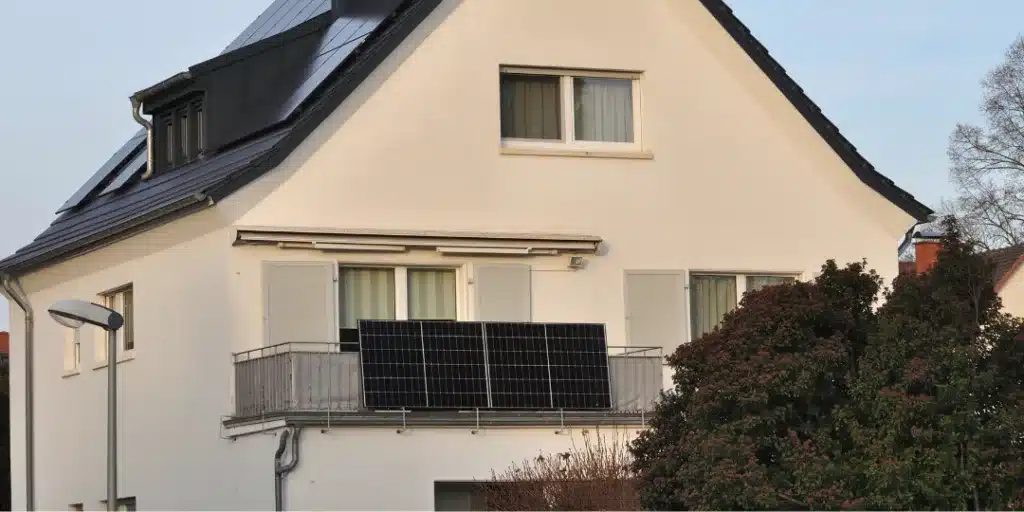
A plug-in solar kit is a small, self-contained solar setup designed to connect directly to a standard household socket, rather than being wired permanently into your consumer unit like a traditional rooftop system. Typical 800w plug in solar kits consist of one or two panels, a microinverter (a small device that converts the panel’s output into usable household electricity), and a cable that connects to a normal 13A plug.
You mount the panels somewhere that gets decent sunlight, such as a balcony rail, patio fence, or garden wall, plug the cable in, and the system starts feeding electricity into your home’s circuits the moment the sun hits the panel.
Why Do People Get Them?
Convenience
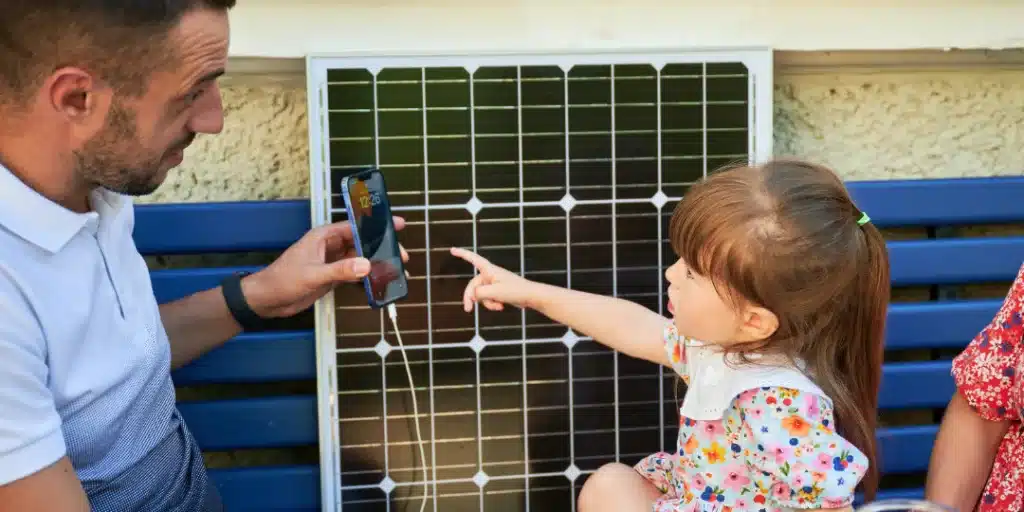
There’s no installer to book, no scaffolding to arrange, and no weeks of waiting for a quote. A plug-in kit can be set up in under an hour by most people with basic DIY confidence.
Lower Cost
A full rooftop solar system in the UK typically runs from £3,000 to £10,500, depending on size. An 800w plug in solar kit, by comparison, can cost as little as £400 to £1,000. The trade-off is generation: a small plug-in system simply can’t produce anywhere near the electricity a properly sized rooftop array does.
Flexibility of Placement
Because the panels aren’t fixed to your roof, you can put them wherever the sun actually reaches, such as a balcony, patio, shed roof, or garden fence. They can also travel with you if you move home, which matters a lot to renters.
Why Are They Becoming More Popular?
Cost-of-living pressure is a big part of the story. More people are renting or living in flats than ever before, and a growing share of UK households simply don’t have access to a roof they own. For those people, traditional solar has never been on the table.
At the same time, every pound counts more than it used to. A kit that saves £100 to £200 a year might not sound transformative, but for a household watching every bill closely, it’s a saving that’s better than nothing, and one that arrives with almost no upfront commitment.
How Does an 800W Plug-In Solar Kit Work?
The process is straightforward. Sunlight hits the solar panel and generates DC (direct current) electricity. This DC electricity passes through the microinverter, which converts it into AC (alternating current), the type of electricity your home’s appliances actually use. The AC power then flows into your home’s wiring via the plug, reducing the amount of electricity you need to pull from the grid at that moment.
It’s the same basic principle as rooftop solar, just scaled right down and simplified for a plug rather than a dedicated circuit.
How Are They Different to Rooftop Solar Panels?
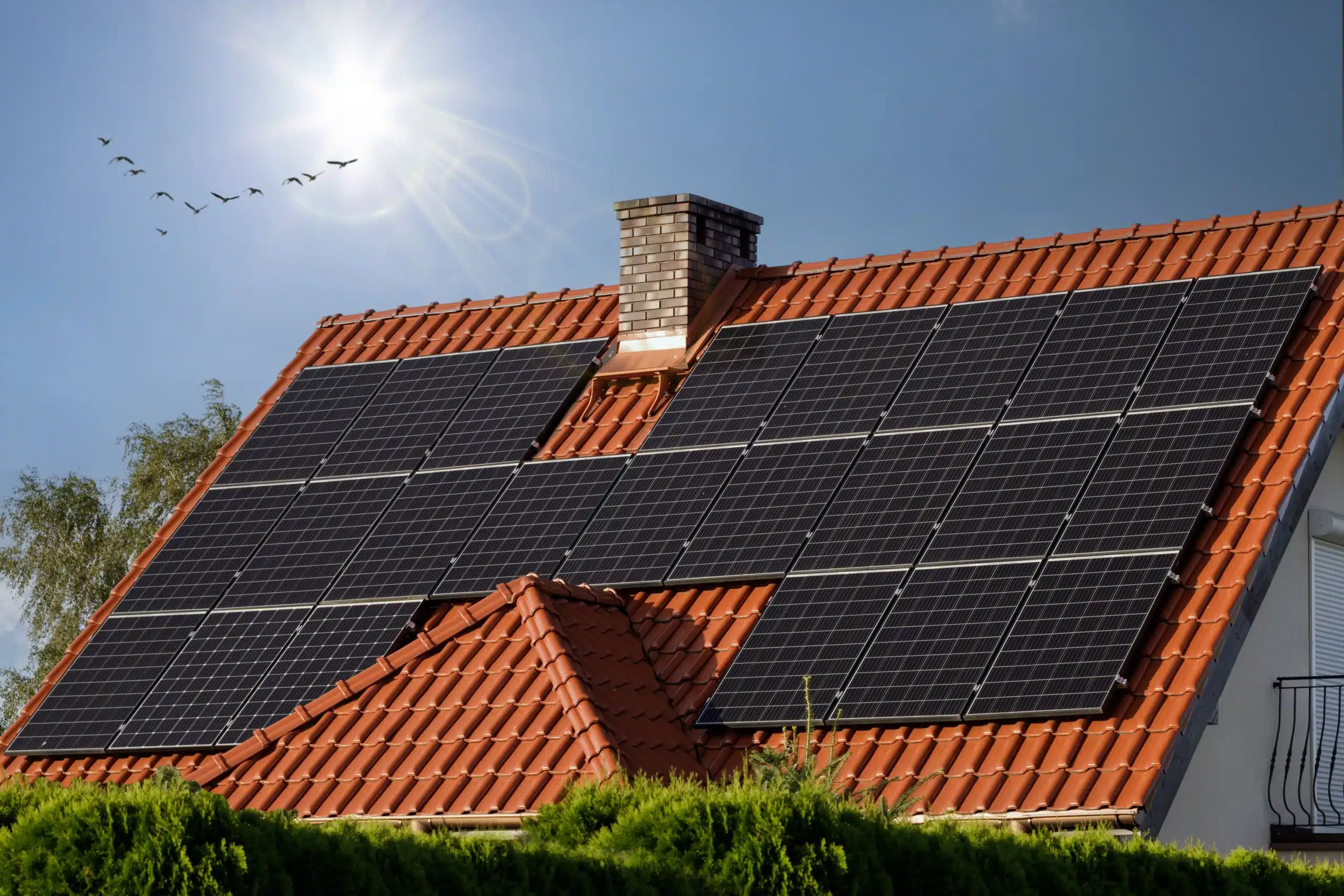
The core difference is scale. A typical UK home uses around 3,300 kWh of electricity per year, and a properly sized rooftop system generates around 4,000 kWh annually to comfortably cover that.
800w plug in solar kit: by contrast, might generate somewhere between 600 and 800 kWh a year, a fraction of what a full system produces.
Rooftop solar: Permanent, hard-wired, and typically certified under the Microgeneration Certification Scheme (MCS), which opens the door to the Smart Export Guarantee (you get paid for surplus electricity you export to the grid). Plug-in kits generally aren’t MCS-certified, so there’s no export income, only savings on the electricity you’d otherwise have bought.
What plug-in kits do offer is portability. You’re not committing to a fixed installation, and the panels move with you if your circumstances change.
Why Is the 800W Limit in Place?
The 800W cap isn’t an arbitrary number. It exists because UK household wiring and standard 13A sockets are only designed to safely handle a certain amount of additional generation without risking overheating. The whole point of creating a plug-in category was to give households a simpler, more accessible route into small-scale solar, one that doesn’t need the safety checks and certification a full fixed installation requires. That only works if the systems genuinely stay small. Push past 800W, and you’re back in the territory that needs proper hard-wiring and certification.
Where Can You Buy an 800W Plug-In Solar Kit?
A growing number of UK retailers stock compliant kits, including Amazon UK, with Lidl and other major retailers confirming plans to follow once the British Standards Institution (BSI) finalises its dedicated product standard, expected around mid-2026. Until that standard is published, the safest and most fully compliant route is to have your kit connected by a registered electrician and to notify your Distribution Network Operator (DNO) under the G98 process, a quick online form, not an approval you need to wait on.
It’s worth checking that any kit you buy carries CE or UKCA marking before you purchase, and that you’ve followed the government’s official guidance on plug-in solar.
When Is Plug-In Solar Better Than Rooftop Solar?
An 800w plug in solar kit makes genuine sense if you:
- Rent your home and can’t install a permanent system
- Want a low-cost way to dip a toe into solar
- Have limited outdoor space, like a balcony or small patio
- Use relatively little electricity day-to-day
- Want to try solar before committing to a full rooftop installation
If any of those describe your situation, a plug-in kit is a reasonable, low-risk option.
How Much Does an 800W Plug-In Solar Kit Cost?
A decent mid-range 800w plug in solar system typically costs between £600 and £1,000, which is likely close to the practical upper limit the UK permits for this category. Cheaper basic kits exist for less, but quality, certification, and warranty support all tend to scale with price.
What’s the Payback Period for Plug-In Solar?
If your system generates somewhere between 600 and 800 kWh a year, and you’re paying around 24p per kWh for electricity, you’re looking at savings of roughly £144 to £192 per year. At that rate, a £600 to £1,000 kit pays for itself in around four to six years.
Smaller, cheaper kits generate even less, which stretches the payback period further. This is the trade-off that’s easy to miss in the marketing: a bigger investment in proper rooftop solar produces more savings over the same timeframe, dramatically, simply because it’s generating several times more electricity.
Safety Considerations and Risks
Because plug-in kits are typically set up by the homeowner rather than a certified installer, there’s more room for things to go wrong. Poor wiring, incorrect connections, or skipping the DNO notification step can create real safety risks, and in the worst case, an incorrectly connected system won’t generate any usable electricity at all. You’ll have effectively bought an expensive garden ornament rather than a working solar kit.
When Rooftop Solar Is the Better Investment
Here’s the part worth sitting with. If you own your home and have a roof with decent sun exposure, a plug-in kit is solving a problem you don’t actually have. The convenience and low cost that make plug-in solar so appealing to renters and flat-dwellers simply aren’t the deciding factors for a homeowner.
A properly installed rooftop system generates roughly four times more electricity than an 800w plug in solar kit, qualifies for the Smart Export Guarantee so you get paid for what you don’t use, carries a 0% VAT rate on installation, and typically lasts 25 years or more. Over that lifespan, the savings difference between a small plug-in kit and a full rooftop system isn’t small; it’s thousands of pounds.
If you’re a homeowner who’s been eyeing an 800w plug in solar kit purely because it’s cheap and easy, it’s worth at least checking what you’d be eligible for with a full installation first. Funding and grant options exist that can bring the upfront cost down significantly, and Solar Panel Funding can help you find out what you could qualify for, free of charge, before you commit to anything.
FAQs
Q: Is plug-in solar legal in the UK?
A: Yes, as of 15 April 2026, under BS 7671 Amendment 4. Systems are capped at 800W, and DNO notification under the G98 process is required.
Q: Do I need an electrician to install an 800w plug in solar kit?
A: Until the BSI publishes its dedicated product standard, having a registered electrician handle the connection is the safest and most compliant approach. Fully DIY socket installation is expected to become straightforward once that standard lands.
Q: Can renters install plug-in solar panels?
A: Yes, this is one of the main reasons the category exists. Always get permission from your landlord for any mounting hardware before fitting panels to a balcony or exterior wall.
Q: How much electricity does an 800W kit actually generate?
A: Typically between 600 and 800 kWh a year, depending on positioning and sunlight, a fraction of what a full rooftop system produces.
Q: Will I get paid for the excess electricity I generate?
A: Generally, no. Most plug-in kits aren’t MCS-certified, so they don’t qualify for the Smart Export Guarantee. Savings come purely from the electricity you don’t have to buy.
The Bottom Line
An 800w plug in solar kit is a genuinely useful option for renters, flat-dwellers, and anyone with limited outdoor space who wants a low-risk way to start generating their own electricity. For that audience, it’s a smart, low-commitment step.
But if you own your home and have a roof catching even a reasonable amount of sun, the maths tells a different story. A full rooftop system, especially with funding or grants reducing the upfront cost, will save you far more over the long run than a small plug-in setup ever could.
If that’s you, it’s worth finding out what you could be eligible for before deciding plug-in solar is your best option. Get in touch today to see what funding might be available for a full rooftop installation and find out how much faster a properly sized system could pay for itself.